Chronicles of Klept: Chapter I
The valley was alive with celebration.
Even from our little tent, I could hear the boisterous laughter of merchants closing deals, the cheers of festival-goers as contestants boasted oversized vegetables and absurd feats of strength, and the musical chaos of bards attempting to outplay one another in every corner of the market. Somewhere, someone was playing the bagpipes with a level of enthusiasm that suggested either profound joy or profound distress. It was hard to tell.
It was the final day of the Harvest Festival, the grandest celebration in the region, and for most, it was the culmination of joy before the long winter ahead. For the merchants, it was the last chance to sell their wares. For the tavern owners, it was the final opportunity to convince patrons that a pint of ‘experimental pumpkin brandy’ was a good idea. For the church, however, today held a far greater purpose.
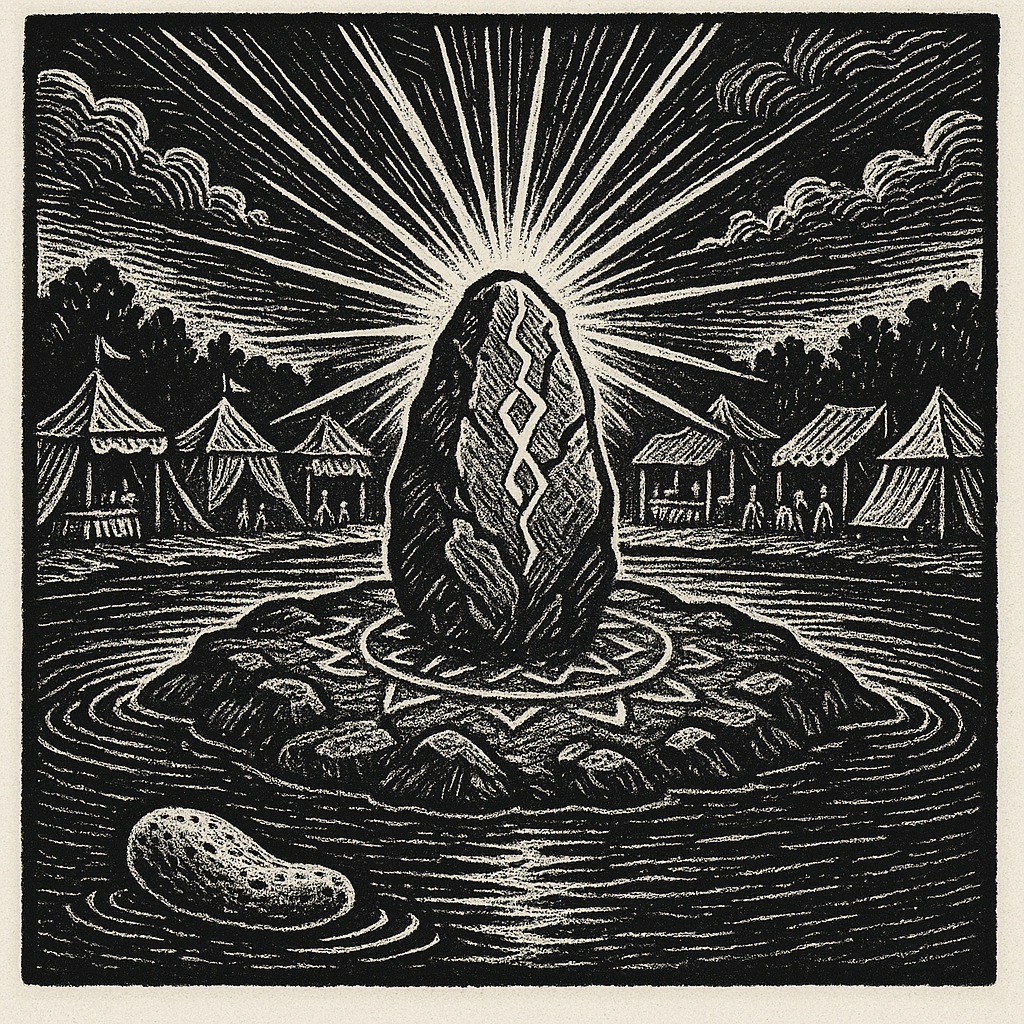
At midday, as the sun reached its peak, its rays would strike the crystals embedded deep within the Prophet Rock, sending beams of light across the etched glyphs surrounding its base. These symbols, illuminated by celestial design, would tell us what the coming year would bring—a prophecy dictated by the divine forces that shaped this world. One would think, after centuries of this tradition, that the divine forces might consider writing in a more legible script, but no—cryptic glowing runes it was.
The day had already begun with an air of nervous anticipation, and nothing soothes public anxiety quite like an unexpected spectacle. Enter: The Bean Incident.
Somewhere amid the stalls and competitions, an elven man—who I would later come to know as a very particular sort of disaster—was lamenting the fact that he had missed the Largest Bean Competition due to what was, by all accounts, an excessive amount of cider the previous evening. In what I assume was a solemn act of mourning, or possibly just a dramatic gesture to make himself feel better, he hurled his absurdly large bean into the small lake surrounding the Prophet Rock, where it bobbed on the surface like a misplaced agricultural relic.
The bean, as it turns out, had not seen its final act.
Because that was the moment the gnome arrived.
Now, I do not claim to be an expert in the minds of gnomes, but I can only assume that, upon seeing the cordoned-off Prophet Rock, this particular gnome came upon an idea in a way that only gnomes (or possibly very determined ducks) can. He made a break for it.
To the cheers of an increasingly enthusiastic crowd, he leapt the barrier, dove into the water, and realization seemed to strike, for it was obvious the individual lacked the ability to swim. However, the luck of Jovian appeared on his side, for at that moment what should float by him, but an overly large bean. The Gnome lunged for the floating bean with the urgency of a drowning man reaching for a lifeline—except instead of a lifeline, it was an uncooperative, bobbing vegetable. His arms flailed, his legs kicked, and for a moment, he seemed to be doing an impression of a particularly startled moose attempting to ice-skate. The bean, for its part, had no interest in being mounted, rolling indignantly beneath him like a tavern stool under an exceptionally drunk patron. It was not a graceful rescue. It was, however, an effective one. He quickly began padding his way toward Prophet island in the lakes center.
Few things in life prepare you for the moment when a Gnome attempts to cross a sacred lake on a giant bean. It is a sight that demands immediate classification, and yet no known system of logic or theology has accounted for it. I have made a note to submit a request for divine clarification.
“We should begin moving.”
The voice of High Reader Tufulla pulled me from my thoughts.
Draped in ceremonial robes of gold and white, Tufulla stood at the head of our procession, his expression unreadable as always. He carried his authority with quiet patience, though I had spent enough years under his guidance to recognize the subtle edge of concern in his voice.
I did not ask about it.
I adjusted my quill and parchment as we made our way toward the rope barrier that cordoned off the Prophet and its surrounding water. We did not take boats. We never did. That would be sensible. Instead, High Reader Tufulla, ever the showman, performed his sacred duty of ensuring that we crossed the lake in the most dramatic way possible—by walking on it. For the children, of course. And absolutely not because he enjoys looking important.
With a deliberate flourish, Tufulla tapped his staff to the surface of the water, his voice carrying over the hushed festival crowd. The water beneath us shimmered, stilled, and then held—solid beneath our feet.
One by one, we stepped forward. We did not sink.
To the assembled festival-goers, we walked across the lake as if it were a marble promenade, our robes barely stirring the surface. It was not a necessary gesture—there were perfectly serviceable boats, but tradition demanded spectacle, and Tufulla understood the value of spectacle.
For the children in attendance, it was magic in its purest form.
Some gasped in delight, others whispered in awe, and one particularly eager boy mimicked Tufulla’s movements, waving a stick in the air as if he, too, could command the waters. Tufulla, catching sight of this, winked in the child’s direction, adding a harmless burst of light from his staff as if to say, You never know, young one.
It was a grand sight. And it was completely overshadowed by an overly zealous Gnome and his bean.
At this point, the festival had effectively divided into two camps: those who believed this was some sort of planned entertainment, and those who were too delighted to care. The guards, unfortunately, fell into neither camp and were instead attempting to figure out whose job it was to stop the intrusive Gnome.
None of them got there in time. The gnome had paddled furiously, arms windmilling against the water, the crowd, willing him to reach the rock before we did. Tufulla paid him no attention. We reached the rock moments before he did and with one last act of determination, he began to climb, reaching the top of the Prophet Rock just as the sun reached its zenith.
For a moment, all was still.
Then, as if in divine response to this utterly ridiculous sequence of events, the crystals embedded in the Prophet Rock caught the light, casting beams down upon the dozens of glyphs etched into the surrounding ground below.
The Read had begun.
The glyphs burned brightly, their meaning clear to us, but dire.
My peers and I, the Readers of the Church of the Prophet, had performed our duty well, recording the illuminated symbols as the sunlight bathed the stone and reflected upon the glyphs etched into the ground around the Prophet Rock. The light shimmered, casting long shadows as the illuminated runes told their story.
As High Reader Tufulla and the rest of the Readers exchanged glances, each of us felt the weight of the prophecy settle upon our shoulders. We conferred with each other, checking our notes, making sure we had noted the correct glyphs. Consensus was reached and we turned back toward the Dell. Tufulla gave the order to move, leading us back toward the shore, where the gathered crowd awaited the news. As we began our walk back across the water, Tufulla turned to look at the Gnome standing proudly atop the rock, his eyes had that signature Tufulla twinkle as he smiled at the gnome and then, using his staff gently nudged the bean which began to float away from the shore, and sink. Leaving the poor fellow stranded.
Reaching the main shore, Tufulla headed for the stage. As had always been done – once the glyphs had been ‘read’ and the Readers had conferred, The High Reader would present the new prophecy to the waiting crowd. A hush crept across the Dell as people gathered -moving from their stalls and the ale tents to get closer. To hear what was to come.
Unfortunately, no one heard it, because at that precise moment, the festival was set on fire, an increasingly popular form of political discourse in recent times.
 The Chronicles of Klept